Lakes We Fish
Seasonal strategies, target species, and insider knowledge for every lake we guide on
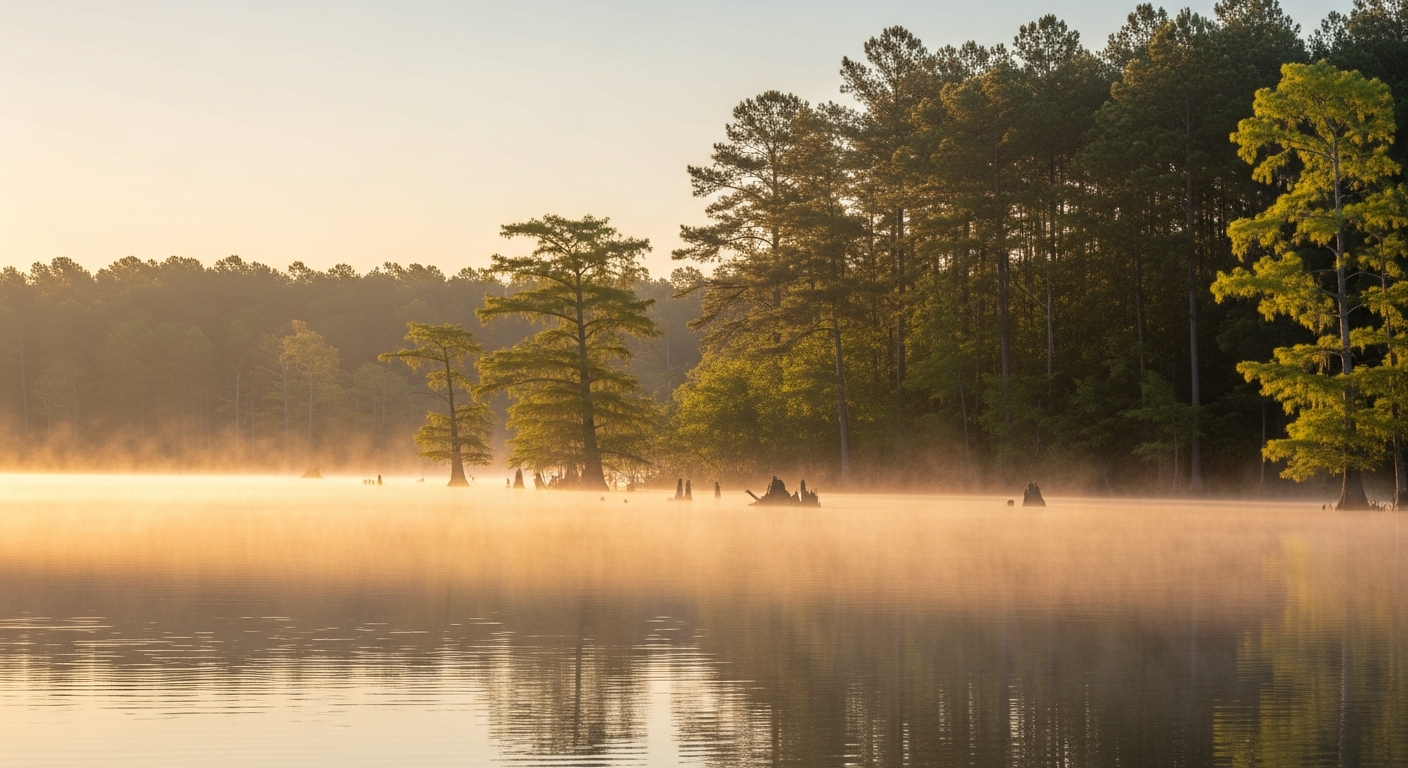
Lake O' the Pines
East Texas's Premier Slab Crappie Fishery
About This Lake
Lake O' the Pines is the crown jewel of East Texas fishing. At 19,780 acres (summer pool) of flooded timber across Marion, Morris, Upshur, and Camp Counties, it offers some of the most productive crappie habitat anywhere in the state. The standing timber — thousands of drowned trees that create a labyrinth of vertical structure — is what defines this lake. It holds fish year-round at different depths, and once you understand how to read it, the bite is almost always on.
Target Species
Crappie
The primary target. Both white and black crappie are abundant. Fish timber at all depths depending on season. 1–2.5 lb fish are common; 3+ lb slabs are regularly caught.
Largemouth Bass
Excellent secondary fishery. Timber edges, cove points, and shallow flats in spring/fall. Fish the 2–6 ft timber transitions at first and last light.
Blue Catfish
Top-tier blue cat lake. Fish creek channels and main lake drops with cut bream or shad. Night trips in June–August are exceptional.
Channel Catfish
Abundant throughout. Easier to target for families and beginners. Chicken liver and cut shad work on most structure.
Seasonal Strategies
- Crappie move shallow to 2–8 ft to spawn around willows and shallow timber edges
- Pink, chartreuse, and white 1/16 oz jigs are the go-to presentation
- Look for shallow creek channel mouths — females stage here before the spawn
- Bass fishing picks up on cove flats with soft plastics and spinnerbaits
- April and May are peak trophy season — fish move fast and bite aggressively
- Crappie suspend in the timber at 18–28 ft to stay in cooler water
- Long-line spider rigging with multiple poles covers depth bands effectively
- Night catfishing on the main channel is outstanding in June and July
- Early morning topwater bass fishing in shaded coves before 8 AM
- Live minnows rigged 2 ft off the bottom near deep timber produce consistent bites
- The best all-around season — crappie are aggressive at 8–15 ft on brush piles
- Brush pile stacking in the spring pays dividends now — fish remember structure
- Baitfish move shallow and crappie follow — fan cast with lightweight jigs
- October bass fishing with crankbaits along timber edges is excellent
- Look for schools of white bass pushing shad to the surface in the main lake
- Trophy slab season — the biggest crappie of the year come out in winter
- Fish deepest standing timber, 20–35 ft, with live minnows under a slip float
- Slow your presentation way down — cold fish are lethargic but will still bite
- Post-cold-front afternoons (48+ hours after the front) often produce the best bites
- Heavy 1/8 oz jigs get down fast in deep water without line bow in the current
Techniques We Use
- Spider rigging — running multiple rods out to cover the water column simultaneously
- Tight-lining on standing timber — dropping a jig straight down the trunk
- Long-pole dock shooting into shallow timber during spawn
- Live minnow under a slip float for big winter slabs
- LiveScope / Garmin forward-facing sonar to locate suspended fish in the timber
Pro Tips
- Follow the depth. In spring fish 2–8 ft; as summer heats up, drop to 18–28 ft. The fish don't leave — they move.
- Chartreuse/white and pink/white jigs outperform everything else on this lake year-round.
- The trees with the most branching hold the most fish — look for 'Christmas tree' structure.
- A slight wind creates a thermocline break that pushes suspended fish tighter to structure.
- Post-cold-front afternoons (2–5 PM) after a 2-day lull often produce the biggest slabs.
Why We Fish Here
"We fish Lake O' the Pines because no other lake in East Texas offers the combination of fish density, structure variety, and year-round consistency. LiveScope has made finding fish faster, but reading the timber and understanding seasonal depth changes is still what separates a good trip from a great one. When the slabs are stacked at 22 feet in a flooded tree line in January, there's nothing else like it."
— James Chesnut, ETX Outdoors Guide
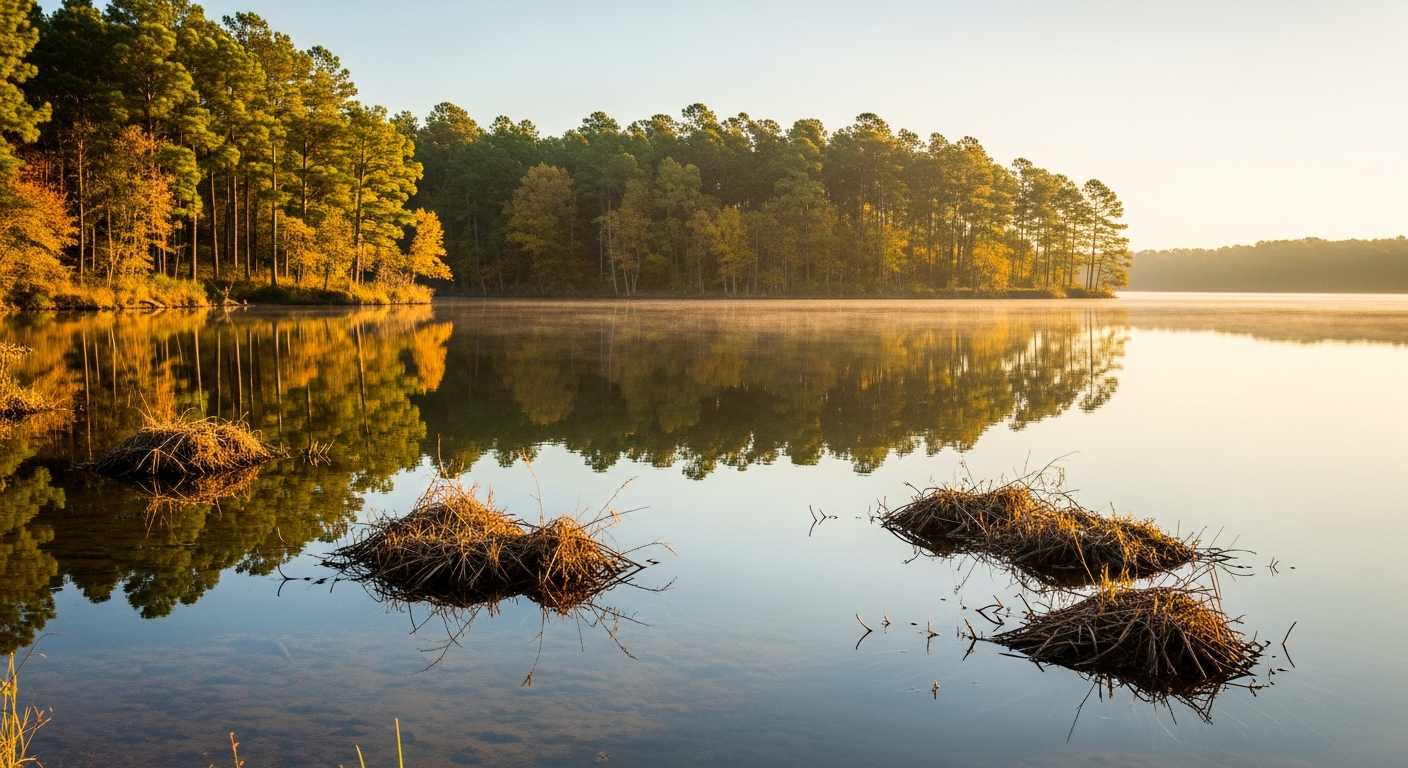
Lake Bob Sandlin
Consistent Action, Less Pressure, Great for Families
About This Lake
Lake Bob Sandlin covers 9,004 acres across Titus, Camp, and Franklin Counties. It's a more intimate fishery than Lake O' the Pines — less boat traffic, calmer water, and a productive mix of brush piles and meandering creek channels. Bob Sandlin tends to be overlooked by tournament crowds, which means the fish see less pressure and are often more willing to bite. It's a lake that rewards anglers who are patient and willing to explore.
Target Species
Crappie
Excellent crappie fishery with both white and black crappie. Brush piles and creek channel edges are the key structure. Spring and fall produce the most consistent action.
Largemouth Bass
Solid bass population that is often overlooked. Timber edges, dock pilings, and grass flats all hold fish. Best in spring (pre-spawn) and fall.
Channel Catfish
Very strong channel cat population — great for families. Flat areas with soft bottom hold fish all year. Chicken liver and nightcrawlers are top baits.
Blue Catfish
Present in the main channel and deeper sections. Cut shad is the top bait. Night fishing in warmer months produces the biggest fish.
Seasonal Strategies
- Crappie spawn in shallow creek arms 2–6 ft deep — fish the willows and laydowns
- This is the most family-friendly season — fish are close to the bank and active
- Bass pre-spawn on flats with crawfish-colored soft plastics
- Catfish move to feeding flats at night — chicken liver and cut shad work
- Water temperature around 62–68°F triggers the best spring crappie bite
- Brush piles at 12–18 ft hold crappie throughout the summer heat
- Fish early (before 8 AM) and late (after 5 PM) to beat the heat
- Channel catfish are excellent targets all summer on baited flats
- Night fishing for cats on the main lake channel produces larger fish
- Bass school on main lake points chasing shad — match the bait with a shad-colored crankbait
- Best season on Bob Sandlin — brush piles light up with aggressive feeding crappie
- Look for large schools of shad pushed against creek channel bends
- Jigs in natural shad colors (silver/white/gray) outperform bright colors in fall
- Largemouth bass hit crankbaits and swimbaits along timber lines as water cools
- October through mid-November is the peak window before the winter slowdown
- Upper creek arms retain warmth and concentrate fish — start there on cold mornings
- Slow-roll jigs along channel edges at 14–20 ft for suspended crappie
- Live minnows outperform plastics when water temp drops below 50°F
- Midday fishing is more productive than morning when it's cold
- Catfish bite slows but still fishable on deeper channel holes with cut bait
Techniques We Use
- Brush pile fishing with a slip cork and live minnow — deadly in spring and fall
- Drop-shotting along creek channel edges for suspended crappie
- Drift fishing with jig rigs across main flats during fall
- Chicken liver on a circle hook for channel cats on the shallow flats
- Swim jigs along timber and grass edges for largemouth bass
Pro Tips
- Mark every brush pile you find — this lake has dozens of quality piles and your GPS waypoints will pay off all season.
- The upper creek arms stay warmer in winter and hold fish longer than the main lake.
- Early morning topwater bass around the boat docks along the east bank is underutilized.
- Crappie here tend to run shallower than at Lake O' the Pines — don't over-think the depth.
- Light tackle wins here — 6 lb fluorocarbon line and a sensitive rod tip make a big difference in clear water.
Why We Fish Here
"Bob Sandlin is our go-to lake when we want consistent action without fighting other boats. It's perfect for families, beginners, or anyone who wants a more laid-back day on the water. The creek channel system is deep and complex, and when you find fish stacked on a brush pile here, they tend to stay all day."
— James Chesnut, ETX Outdoors Guide
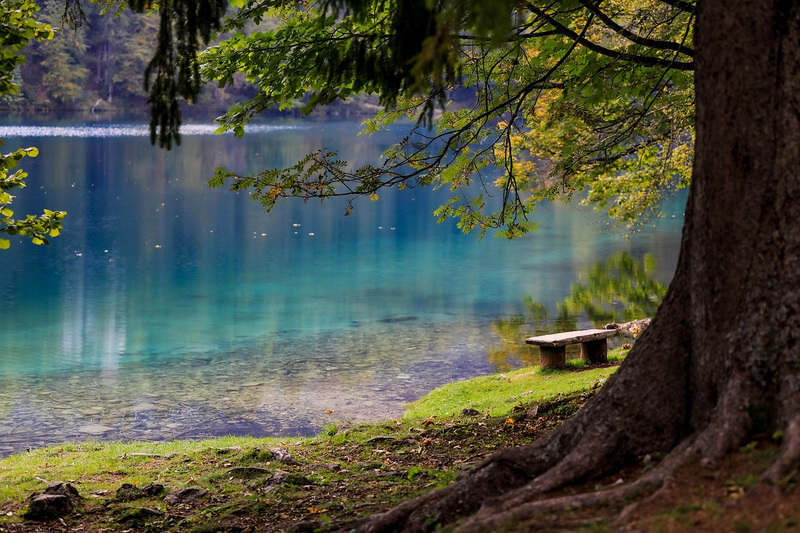
Lake Cypress Springs
Clear Water, Cypress Timber, and a Finesse Fishery
About This Lake
Lake Cypress Springs is one of the most scenic lakes in East Texas. At 3,461 acres in Franklin County, it's smaller and clearer than the other lakes we guide on — which changes everything about how you fish it. The cypress trees that ring the shallows create stunning visual structure and hold bass, crappie, and catfish year-round. The clearer water rewards finesse presentations and light tackle, and the relative solitude here makes it a premium experience.
Target Species
Largemouth Bass
The headline species at Cypress Springs. Quality fish in the 2–5 lb range with occasional trophies. Cypress roots, rocky points, and deep timber transitions hold fish all year.
Crappie
Excellent crappie population that benefits from the submerged timber. Lighter tackle and natural presentations are more effective here than on timbered lakes.
Channel Catfish
Plentiful on the sandy flats and soft-bottom areas. Easy to target and great for family trips. Nightcrawlers and stink baits produce consistently.
White Bass
High density population with excellent action in open water. Chase shad schools aggressively in spring and fall — small spoons and swimbaits get explosive strikes.
Seasonal Strategies
- The best bass fishing of the year — fish spawn on the sand and gravel flats near cypress roots
- Crappie stage in 3–8 ft around the cypress tree bases before moving to spawn
- Sight fishing for bass in clear water with weightless Senkos is extremely effective
- Early morning topwater in the cypress pockets is unforgettable
- Avoid polarized light conditions — bass see your bait clearly, so slow down the retrieve
- Bass move to deeper timber and ledge breaks — Carolina rigs and swimbaits produce
- Fish the shaded north-facing banks and cypress canopies during the heat
- Crappie suspend over deep brush in 15–20 ft — use vertical jigging techniques
- Early morning and after 6 PM produce significantly better in summer heat
- Channel catfish feed heavily along the sandy flats with nightcrawlers
- Outstanding fall bass season — fish are stacked on points feeding on shad
- Crappie move back into the cypress structure at 6–12 ft
- Shad imitation lures in silver/white dominate — match the prevalent baitfish
- October is arguably the best month on this lake for variety of species
- Follow the white bass and shad schools — when you see surface activity, fish aggressively
- Bass school deep on main lake ledges at 18–25 ft — vertical jigging and spoons produce
- Mid-day fishing between 11 AM and 2 PM is most productive in cold months
- Live minnows under a slip cork on deeper structure for crappie
- Blue catfish are available year-round in the deeper sections
- Clear water means you can sometimes spot inactive bass on the bottom — slow presentations work
Techniques We Use
- Finesse jigging with light 1/32 oz heads and 2-inch plastic bodies
- Skipping small jigs under cypress canopy with a spinning rod
- Texas-rigged soft plastics pitched to cypress root systems for bass
- Drop-shot rigging suspended crappie in clear mid-depth water
- Small silver spoons cast into surfacing schools of white bass
Pro Tips
- Clear water means you can see the fish — but they can see you too. Stay back from your targets.
- Use fluorocarbon leader material — the low visibility gives you a major edge over monofilament.
- Focus on the shaded side of cypress trees during midday in summer.
- Wind-blown points on the north end concentrate baitfish in the fall.
- Light-colored jigs work better in clearer water — white, pearl, and smoke outperform chartreuse.
Why We Fish Here
"Cypress Springs is for anglers who want a different kind of experience — beautiful, quiet, and technical. When the bass are stacked under cypress roots in April, or when crappie are suspended in the submerged timber in October, this lake fishes as good as it looks. It's also an outstanding lake for anglers learning to read structure and refine their technique."
— James Chesnut, ETX Outdoors Guide
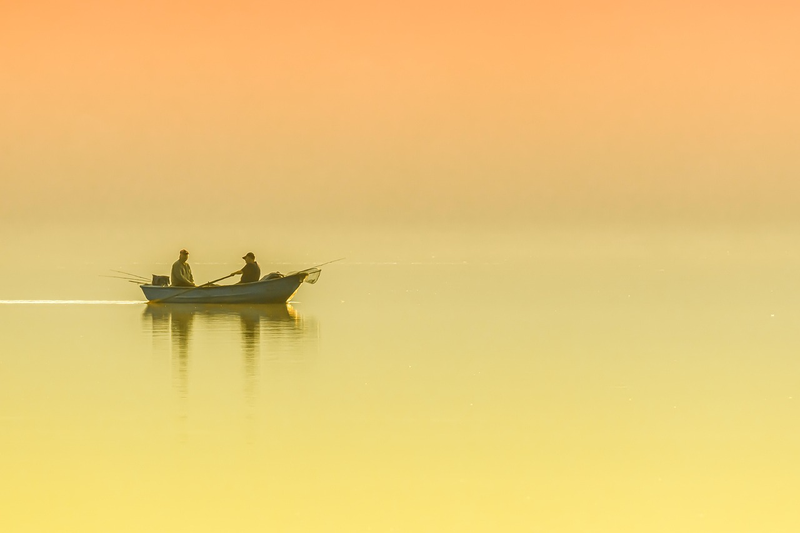
Martin Creek Lake
Warm-Water Discharge Creates a Year-Round Fishery Unlike Any Other
About This Lake
Martin Creek Lake is East Texas's best-kept secret for cold-weather fishing. The 4,981-acre reservoir near Tatum in Rusk County is fed by a power plant thermal discharge that keeps water temperatures significantly warmer than surrounding lakes in winter — sometimes 20–30°F warmer. That warm water concentrates fish from across the lake near the discharge area during cold months, creating a winter fishery that is genuinely exceptional. In warmer months, it's a solid crappie and catfish lake with consistent action.
Target Species
Channel Catfish
The most abundant catfish species in the lake. Easy to target year-round on soft-bottom flats. Great for family trips and beginners. Chicken liver and nightcrawlers work well.
Blue Catfish
The heavyweights of Martin Creek, especially in winter. Fish up to 40+ inches are present near the thermal discharge. Cut shad and skipjack on the main channel are the proven approach.
Crappie
Solid crappie fishery that benefits from the earlier spring warming. Both white and black crappie present. Brush piles and creek arms are the primary structure.
Largemouth Bass
Underutilized bass fishery. North-end coves and creek channel transitions hold quality fish. Best in spring and fall when water temps are ideal.
Seasonal Strategies
- Crappie spawn begins earlier than other East Texas lakes due to warmer baseline water temps
- Fish shallow creek arms 1–5 ft in late February through March
- Catfish begin moving to flats and are very catchable on cut bait
- Bass fishing picks up on the north end flats with soft plastics and spinnerbaits
- Excellent time to bring beginners — fish are shallow, active, and the weather is comfortable
- Summer is the most challenging season due to warm water temperatures — fish are stressed
- Fish before sunrise and after sunset to find active fish
- Night catfishing on the main channel is the top summer strategy — fish are feeding hard after dark
- Stay away from the discharge area in summer — the added warm water concentrates stress
- Crappie move to deepest available cool water — fish brush piles at 18–22 ft with light jigs
- Best all-around season — water temperatures normalize and fish spread across the lake
- Crappie are aggressive on brush piles at 8–15 ft through October and November
- Big catfish move to feeding patterns as water cools — cut shad on the main channel is deadly
- Bass are active on points and secondary creek channels chasing shad
- October on Martin Creek can rival any lake in East Texas for variety and volume
- The thermal discharge is the key — water near the plant runs 65–72°F even on freezing days
- Catfish stack in the warm discharge plume and feed actively all day
- Crappie and bream also concentrate in the discharge zone — great for light tackle
- This lake is fishable when others are locked up — ideal for diehard winter anglers
- Cut skipjack herring and fresh shad are far superior to frozen bait in warm discharge water
Techniques We Use
- Anchor near the thermal discharge zone and bottom fish with cut shad
- Float fishing for crappie in the warm water column near the discharge
- Spider rigging brush piles along the creek channel in spring and fall
- Night fishing for large catfish on the main channel
- Shallow crank baits on warm water flats in winter near the discharge
Pro Tips
- The warmest water in winter is within 300–500 yards of the discharge — this is where you start in December.
- Water temperature at the discharge fluctuates with power plant output — check conditions before the trip.
- Baitfish concentrate near the warm water in winter, and the predators follow. Don't stray far from the discharge.
- Summer fishing is best early morning and at night to beat the thermal stress from the already-warm water.
- Circle hooks with cut shad or skipjack are the most effective rigs for big blue catfish here.
Why We Fish Here
"We fish Martin Creek in winter when other lakes are at their slowest. The thermal discharge is like a magnet — fish that would otherwise be lethargic and spread across the lake stack up in the warm water and feed actively even in December and January. If you've never caught catfish through a cold front in 70°F water when the air temp is 35°F, you're missing out."
— James Chesnut, ETX Outdoors Guide